
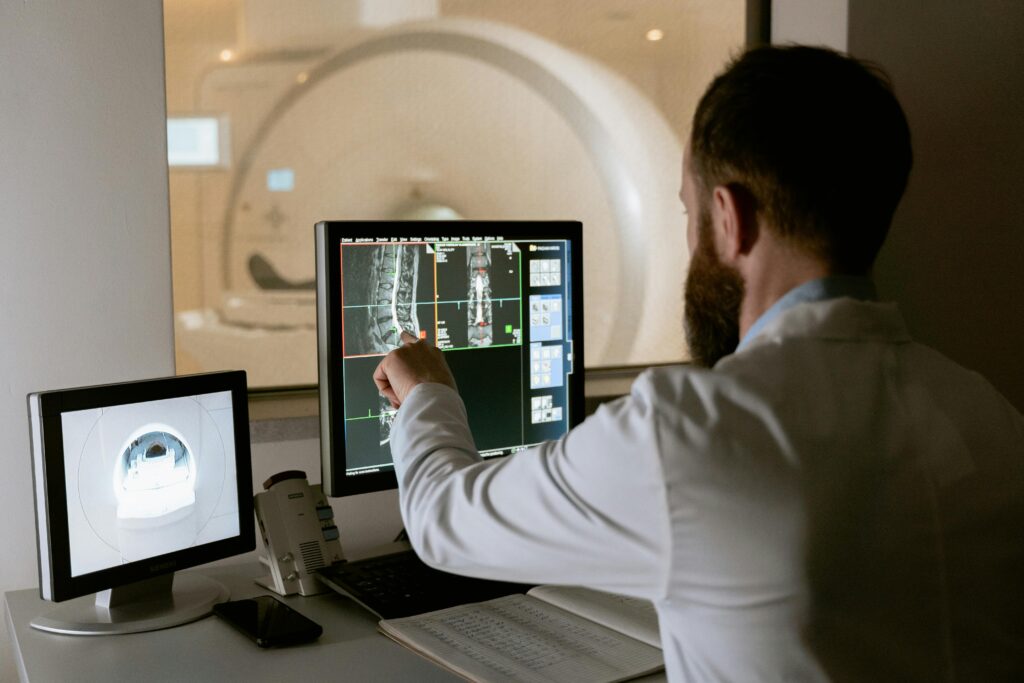
Artificial intelligence is no longer a futuristic concept in healthcare — it is becoming a foundational layer of modern medicine. From early disease detection to drug discovery and hospital management, AI is reshaping how care is delivered, accessed, and improved. In 2026, the healthcare sector stands at a pivotal moment where algorithms are not replacing doctors, but increasingly empowering them.
Smarter Diagnostics, Earlier Detection
One of AI’s most significant impacts is in diagnostics. Machine learning systems can now analyze medical imaging — X-rays, MRIs, CT scans — with remarkable speed and accuracy. In some cases, AI tools detect subtle abnormalities that may be overlooked in routine screenings.
Research institutions and companies like Google DeepMind have demonstrated how AI models can identify early signs of eye disease, cancer markers, and protein structure patterns that accelerate biomedical research. These tools help clinicians make faster, data-informed decisions, reducing diagnostic delays that can cost lives.
AI is also enhancing pathology and genomics, enabling personalized medicine tailored to an individual’s genetic profile.
Revolutionizing Drug Discovery
Developing a new drug traditionally takes over a decade and billions of dollars. AI is dramatically shortening this timeline. By analyzing massive biological datasets, algorithms can predict how molecules will interact, identify promising compounds, and even repurpose existing drugs for new treatments.
Pharmaceutical firms are increasingly partnering with AI startups to speed up research pipelines. During global health crises, such rapid modeling can mean the difference between months and years in vaccine or treatment development.
Personalized Treatment Plans
AI systems are now capable of integrating patient histories, genetic information, lifestyle data, and real-time monitoring from wearable devices. This allows for highly personalized treatment strategies.
For chronic conditions such as diabetes or cardiovascular disease, predictive models can flag risks before symptoms escalate. Doctors receive alerts, patients receive preventive care recommendations, and healthcare systems reduce costly emergency interventions.
The result is a shift from reactive medicine to preventive, precision-based care.
Hospital Efficiency and Operational Intelligence
Beyond clinical settings, AI is optimizing hospital operations. Predictive analytics can forecast patient admission rates, optimize staff scheduling, and manage supply chains more efficiently.
Healthcare systems guided by frameworks from organizations like the World Health Organization are increasingly integrating digital infrastructure to improve resilience. AI helps hospitals anticipate resource shortages, streamline workflows, and reduce administrative burdens — freeing medical professionals to focus on patient care.
Expanding Access to Care
AI-powered telemedicine platforms and virtual health assistants are expanding access in rural and underserved communities. Language translation tools, symptom-checker apps, and remote monitoring systems are breaking geographical barriers.
In developing regions, AI-enabled mobile diagnostics are bridging gaps where medical specialists are scarce. This democratization of expertise could significantly reduce global health inequalities.
Ethical and Regulatory Challenges
Despite its promise, AI in healthcare raises complex ethical questions. Data privacy, algorithmic bias, and accountability remain pressing concerns. An AI system trained on limited demographic data may produce unequal outcomes, reinforcing existing health disparities.
Governments and regulatory bodies worldwide are working to establish safety standards and oversight mechanisms. Transparency in algorithm design and rigorous clinical validation are essential to maintain trust in AI-driven medicine.
The Human Element Remains Central
AI does not replace empathy, judgment, or human connection — qualities that define effective healthcare. Instead, it acts as a powerful decision-support system. The most successful healthcare models combine technological innovation with skilled professionals who interpret and apply AI insights responsibly.
In this sense, AI is not the future doctor — it is the future assistant.
Looking Ahead
As computing power grows and data ecosystems mature, AI’s role in healthcare will continue to expand. The next frontier includes real-time disease surveillance, AI-assisted robotic surgery, and fully integrated digital health ecosystems.
The transformation is already underway. The question is not whether AI will shape healthcare, but how effectively we can harness it to improve outcomes, reduce costs, and make quality care accessible to all.
The age of intelligent medicine has arrived — and it is redefining what is possible.