
Signs You Have a Pest Problem at Home (And When to Call the Professionals)
Most pest problems don’t announce themselves. By the time you spot the obvious signs — a mouse running across the kitchen floor, a trail of ants across the worktop, a wasp nest under the eaves — the issue has usually been developing for weeks, sometimes months. The earlier you catch a pest problem, the easier and cheaper it is to deal with. The later you leave it, the more established the infestation becomes, and the more damage it can cause.
Here’s what to look for, what different signs might indicate, and — crucially — when to stop relying on DIY solutions and pick up the phone to a professional.
Rodents: Mice and Rats
Rodents are among the most common household pests, and they’re also among the most destructive. They gnaw through wiring, insulation, and structural materials, contaminate food, and carry diseases. And they breed fast — a small problem can become a significant one in a matter of weeks.
Warning signs to look for:
Droppings — the most reliable indicator of a rodent presence. Mouse droppings are small, dark, and pointed at both ends, roughly the size of a grain of rice. Rat droppings are larger, about the size of a raisin. Fresh droppings are dark and moist; older ones are dry and grey. Find them along skirting boards, behind appliances, inside cupboards, and anywhere food is stored.
Gnaw marks — rodents gnaw constantly to keep their teeth worn down. Look for gnaw marks on food packaging, wooden furniture, skirting boards, cables, and pipe insulation. Fresh gnaw marks are pale and rough-edged; older ones darken over time.
Scratching noises — particularly at night, when rodents are most active. Scratching, scurrying, or squeaking sounds from within walls, ceilings, or under floorboards are a strong indicator of a rodent presence.
Nesting material — shredded paper, fabric, insulation, or plant material gathered into a pile in a hidden corner, inside a wall cavity, or behind an appliance.
Grease marks — rodents follow the same routes repeatedly, and the grease and dirt from their fur leaves dark smear marks along walls, pipes, and skirting boards.
Footprints — in dusty areas, you may see small footprints or tail drag marks.
When to call a professional: If you find signs of rats rather than mice, call immediately — rats are more aggressive, harder to eliminate, and pose a greater health risk. For mice, DIY traps can work for a single mouse, but if you’re seeing multiple signs across the home, or if traps aren’t working within a week or two, it’s time to bring in expert help.
Cockroaches
Cockroaches are resilient, fast-breeding, and notoriously difficult to eliminate without professional treatment. They contaminate food and surfaces and are associated with triggering asthma and allergies. A cockroach sighting during the day is particularly concerning — they’re nocturnal, so daytime activity usually indicates a large, overcrowded infestation.
Warning signs to look for:
Live cockroaches — particularly during daylight hours, which suggests a significant population.
Droppings — small, dark, cylindrical droppings resembling ground black pepper or coffee grounds, found in areas where cockroaches hide: behind appliances, inside cabinets, under sinks.
Egg cases (oothecae) — oval, brown casings about 8-10mm long, found in hidden areas. Each case can contain up to 40 eggs.
Shed skins — cockroaches moult several times as they grow, leaving behind their old exoskeletons.
Musty odour — a distinctive, unpleasant smell that becomes more noticeable as an infestation grows.
Smear marks — dark, irregular marks along surfaces where cockroaches travel.
When to call a professional: Almost immediately. Cockroaches are extraordinarily difficult to eliminate with over-the-counter products because they hide in inaccessible areas, breed rapidly, and can develop resistance to common pesticides. Professional treatment is strongly recommended at the first confirmed sighting.
Bed Bugs
Bed bugs are small, flat, reddish-brown insects that feed on blood — predominantly human blood — at night. They’re not associated with poor hygiene; they hitchhike into homes via luggage, second-hand furniture, and clothing, and can infest even the cleanest properties.
Warning signs to look for:
Bites — itchy, red welts on the skin, often in a line or cluster, typically on exposed areas like arms, neck, and legs. Bite patterns alone aren’t conclusive since reactions vary and other insects can cause similar marks, but bites combined with other signs is a strong indicator.
Blood spots — small, rust-coloured spots on bed sheets, pillowcases, or mattresses from crushed bugs or feeding activity.
Dark spots — tiny dark spots (bed bug excrement) on mattress seams, bed frames, headboards, and nearby furniture.
Shed skins — pale, hollow exoskeletons left behind as bed bugs grow.
Live bugs — flat, oval, apple-seed sized insects hiding in mattress seams, box springs, bed frames, headboards, behind picture frames, and inside electrical outlets.
Musty sweet odour — a faint but distinctive smell in heavily infested rooms.
When to call a professional: Immediately. Bed bugs are one of the hardest pest problems to resolve without professional intervention. They hide in dozens of locations throughout a room, eggs are resistant to most sprays, and DIY treatments almost always fail to fully eliminate an infestation. Delay typically allows the problem to spread to other rooms.
Ants
A few ants wandering across the kitchen worktop might seem trivial, but ants are often a sign of a much larger colony nearby, and certain species can cause structural damage or food contamination. In California, common household ants include Argentine ants, carpenter ants, and odorous house ants.
Warning signs to look for:
Ant trails — lines of ants moving between a food source and their nest. Following the trail can help identify where they’re entering the property.
Large numbers indoors — occasional ants are normal; consistent trails or large numbers inside suggest an established route into the home.
Sawdust-like material — carpenter ants don’t eat wood but excavate it to build galleries, leaving behind a fine, sawdust-like debris called frass. Finding this near wooden structures is a serious warning sign.
Rustling sounds in walls — large carpenter ant colonies can sometimes be heard within wall voids.
When to call a professional: For common nuisance ants, thorough sealing of entry points and removal of food sources can reduce the problem significantly. But if you’re dealing with carpenter ants — which can cause structural damage over time — or if the infestation persists despite DIY efforts, professional treatment is the right call.
Termites
Termites are one of the most destructive pests a homeowner can face. They feed on wood from the inside out, meaning significant structural damage can occur before any visible signs appear. In California, both subterranean termites and drywood termites are prevalent.
Warning signs to look for:
Mud tubes — pencil-width tubes made of soil and wood particles running along foundations, walls, or floor joists. These are built by subterranean termites as protected pathways between their underground colony and their food source.
Hollow-sounding wood — tap on wooden structures around the home. Wood that sounds hollow or papery has likely been eaten from within.
Frass — drywood termites push their droppings out of small holes in the wood. Finding small piles of what looks like sawdust or sand near wooden structures is a key indicator.
Discarded wings — termite swarmers (reproductive termites) shed their wings after finding a new location to establish a colony. Finding small, equal-length wings near windowsills, door frames, or light sources suggests a swarm has occurred nearby.
Blistering or bubbling paint — can indicate moisture damage from subterranean termites beneath the surface.
Doors and windows sticking — termite damage and the moisture termites introduce can cause wood to warp, making doors and windows harder to open.
When to call a professional: Immediately, and without exception. There is no effective DIY treatment for a termite infestation. The colony needs to be located and eliminated at its source, which requires professional equipment, expertise, and often specialist treatment methods. The longer termites are left untreated, the greater the structural damage.
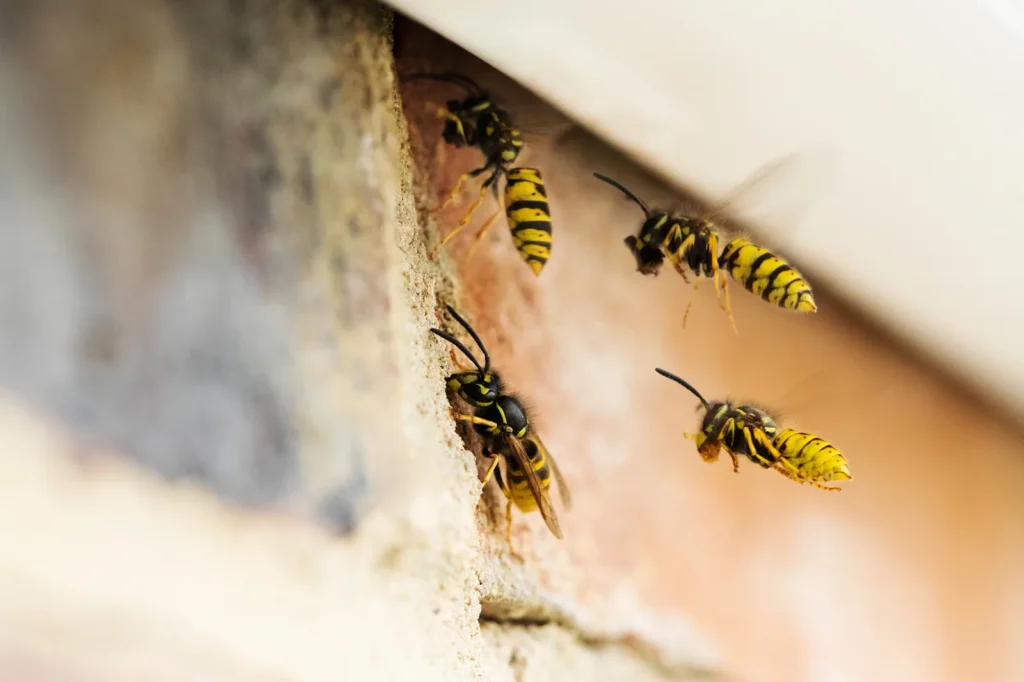
Wasps and Hornets
A wasp or two in the garden is entirely normal. A nest on or in your property is a different matter — particularly if it’s in a high-traffic area, near children, or inside a wall or roof void.
Warning signs to look for:
Increased wasp activity — large numbers of wasps consistently around a specific area of your home, particularly in late summer when colonies are at their largest.
A visible nest — paper-like grey structures in sheltered spots: under eaves, in loft spaces, inside wall cavities, in garden sheds, or in the ground.
Buzzing sounds from within walls or ceilings — a nest inside a wall or roof void may not be visible but will often be audible.
When to call a professional: If the nest is in an accessible outdoor location away from foot traffic and is small, some homeowners treat it themselves using proprietary products. However, if the nest is inside the property, in a wall or ceiling, near a doorway, or particularly large, professional removal is strongly recommended. Disturbing a nest incorrectly can provoke a large-scale attack, which is dangerous — particularly for anyone with an allergy to stings.
Flies
A persistent fly problem inside the home — beyond the occasional insect finding its way in through an open window — is often a symptom of an underlying issue.
Warning signs to look for:
Cluster flies in loft spaces — large numbers of sluggish flies in upper rooms or loft spaces, particularly in autumn, often indicate cluster flies seeking a warm place to overwinter.
Drain flies — small, moth-like flies hovering around drains and sinks. A sign of organic matter buildup in drains.
Persistent large numbers of house flies — can indicate a dead animal within the property (inside a wall cavity, for example) or a waste issue nearby.
Maggots — finding maggots in or around the home indicates fly breeding, which requires locating and removing the source.
When to call a professional: Drain flies can usually be resolved by thoroughly cleaning the drain. For cluster fly infestations, persistent large fly problems, or any situation involving maggots where the source isn’t immediately apparent, professional help is advisable.
General Signs That Something Is Wrong
Beyond species-specific signs, there are some general indicators that a pest problem may be developing:
- Unexplained damage to food packaging, fabrics, books, or structural materials
- Unusual smells — musty, ammonia-like, or sweet odours that can’t be explained
- Pets behaving strangely — dogs and cats often detect pests before humans do, particularly rodents
- Small holes in walls, floors, or skirting boards
- Dirt or grease marks along walls or behind appliances
When DIY Isn’t Enough
There’s a time and place for over-the-counter pest control products. A single mouse, a small ant trail along a window ledge, a wasp nest in a quiet corner of the garden — these are situations where a cautious DIY approach can sometimes work.
But there are clear situations where professional pest control is not just advisable, it’s necessary:
- The infestation involves termites, bed bugs, or cockroaches — these almost always require professional treatment to fully eliminate
- You’ve tried DIY methods and the problem persists or returns
- The infestation is large or widespread across multiple areas of the home
- The pest is in an inaccessible location — inside walls, under flooring, in a roof void
- There’s structural damage, which requires assessment beyond just pest removal
- Anyone in the household has a health condition, allergy, or vulnerability that makes exposure to pests or pesticides a particular concern
- You’re dealing with rats rather than mice
Professional pest controllers have access to products, equipment, and techniques that aren’t available over the counter. They can identify the species accurately, locate the source of the infestation, treat it effectively, and advise on how to prevent recurrence. In most cases, professional treatment resolves infestations faster, more thoroughly, and more cost-effectively than prolonged DIY attempts.
Prevention: The Best Approach of All
Whatever pest problem you’re dealing with, prevention is always preferable to treatment. Some straightforward habits significantly reduce the risk of infestation:
- Store food in sealed containers and clean up spills promptly
- Empty bins regularly and keep outdoor bins away from the house
- Seal gaps around pipes, cables, doors, and windows
- Keep loft spaces and basements dry and well-ventilated
- Remove clutter from storage areas where pests like to nest
- Keep gardens tidy — overgrown vegetation close to the house provides cover for rodents
- Address moisture issues promptly — damp conditions attract a wide range of pests
- Have your home inspected periodically, particularly if you live in an area with known termite or rodent pressure
Final Thoughts
Pest problems rarely resolve themselves, and they almost never get smaller over time. The sooner a problem is identified and addressed, the simpler and less costly the solution. Take the warning signs seriously, act promptly, and don’t hesitate to bring in professional help when the situation calls for it.
Your home is one of your most significant investments. Protecting it from pests is a straightforward part of looking after it properly.



&media=https://knitwitch.com/wp-content/uploads/2026/05/gettyimages-1164872032-1024x682.webp)